AI & Automation
Real Estate Lead Response Time Statistics: What the Research Shows
Buyers move fast and so do competing agents. Here is what the primary research says about how quickly you need to respond to a new lead, and what happens to your odds when you wait.


The research on real estate lead response time points in one direction: speed matters more than most agents realize. Buyers submit inquiries to multiple agents at once, and the first agent to make contact is far more likely to earn the relationship. The exact conversion gap depends on the study, but the pattern is consistent across sources including NAR and Zillow Research: waiting an hour or more to call a lead dramatically lowers your odds of converting them.
How Quickly Do Buyers Expect a Response?
What Buyers Actually Do While They Wait
Buyers are not passive. When a buyer submits an inquiry on Zillow, Realtor.com, or your website, they often submit the same form to two or three other agents in the same session. They are comparison shopping in real time, the same way they compare listings.
The Zillow Consumer Housing Trends Report found that the majority of buyers work with the first agent who responds to them. That single data point defines the stakes: first contact is not just a courtesy, it is the competitive event.
How Quickly Most Agents Respond (and the Gap)
The gap between what buyers expect and what agents deliver is wide. NAR research consistently shows that responsiveness ranks as one of the top factors buyers cite when choosing an agent. Yet the average agent response time, measured across studies of online inquiry forms, runs well over an hour for many practitioners.
Solo agents working without a team or ISA face the widest gap. They are often in showings or negotiations when the lead comes in. By the time they check their phone, the window has closed.
What the Data Says About Contact Windows
The First-Contact Window
The concept of a narrow contact window is supported by multiple data points. The Zillow Consumer Housing Trends Report documents how quickly buyers move from initial inquiry to agent selection. Because buyers contact multiple agents in the same session, the agent who responds first is often the one who gets the appointment.
Here is how response timing maps to the competitive situation the agent faces:
- Under 5 minutes: Lead is likely still on their phone, other agents have not called yet.
- 5-30 minutes: Competing agents may already be in contact.
- 30-60 minutes: Most buyers have heard from at least one competitor.
- Over 1 hour: Lead has likely committed to another agent or moved on.
What Happens After the Window Closes
A lead that does not hear from you within the first hour is not necessarily lost, but your odds drop with every passing minute. NAR data shows that buyers who do not hear from an agent quickly often interpret the silence as disinterest or low responsiveness. That impression is hard to reverse once a competing agent has filled the gap.
Following up later still has value, but the nature of the follow-up changes. You move from being the first call to being a catch-up call, which requires more persuasion and is more likely to go unanswered.
Why Most Agents Miss the Window
The Showing-Day Problem
Solo agents working without support staff face a structural problem. A lead comes in at 2 pm. The agent is in the middle of a showing. The showing ends at 2:45 pm. The drive back takes 20 minutes. The agent calls at 3:10 pm. That is over an hour after the inquiry. The agent did nothing wrong, but the window closed anyway.
This is not a discipline problem. It is a logistics problem. Solo agents working for solo agents without ISAs cannot monitor leads in real time while serving current clients.
The Overnight Lead Problem
A buyer submits an inquiry at 8:45 pm after browsing listings. The agent is asleep by 10:30 pm. The lead sits untouched until 7:30 am the next morning. That is a nearly 11-hour gap. NAR's annual profile data shows that evening and weekend inquiries are common, driven by buyers searching listings outside of work hours. These leads are often the highest-intent ones, submitted because the buyer finally had time to focus.
How to Hit a Sub-5-Minute Response Time Without Checking Your Phone More Often
Automated First Contact: What It Looks Like
The only way to reliably hit a sub-5-minute first contact as a solo agent is to automate the initial outreach. When a new lead enters your pipeline, the system places a call within minutes. If the lead answers, the conversation begins immediately. If they do not answer, a voicemail drops and a follow-up text queues automatically.
This approach runs on your rules. You configure the initial message once. After that, the system executes within those parameters every time, whether you are in a showing, at dinner, or asleep.
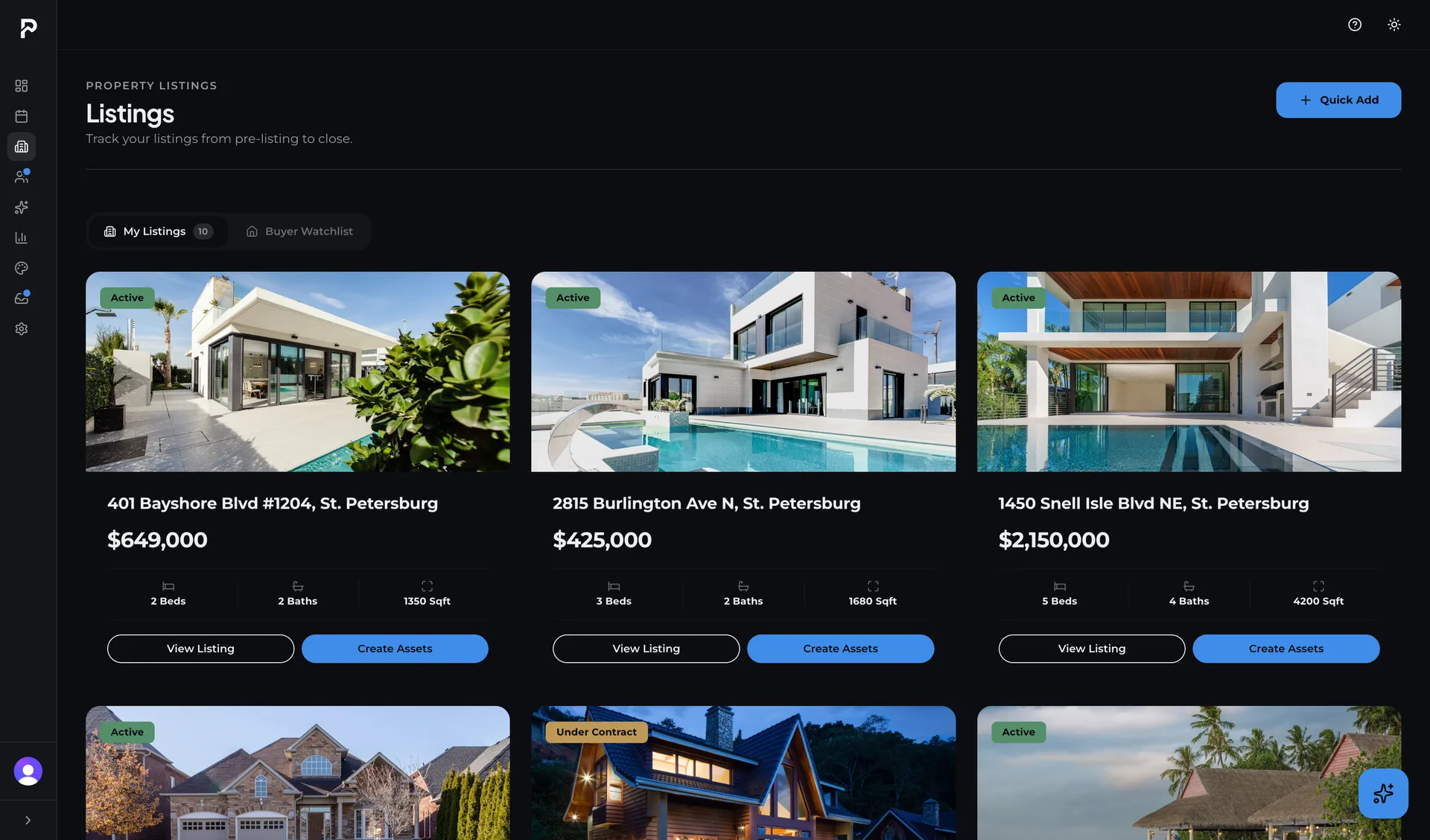
Proplo's AI voice agent places outbound qualifying calls within five minutes of a new lead coming in. The agent has a natural conversation, records it, and extracts budget, timeline, and objections. By the time you are free to follow up, you already know what the lead said.
What Review-First Automation Means for You
Automated first contact is not a black box. The system operates within rules you set, and you receive a full call transcript and AI summary before your follow-up. You are not handing off the relationship to a machine. You are offloading the timing problem so you can step into the conversation with context rather than starting cold.
How Proplo Closes the Window
The speed problem this research describes is the one Proplo is built to solve. When a lead comes in, Proplo places the first call within five minutes, records it, and hands you a transcript and a plain-English summary: who the lead is, where they are in their search, and what to do next. The follow-up sequence then runs on its own, email on day three, text on day five, call on day seven, and stops the moment the lead replies.
For a solo agent managing 200 or 300 contacts without an assistant, that turns lead response from a timing race into a system that runs in the background while you focus on the clients in front of you.
Putting the Numbers in Context
What a Fast Response Rate Is Actually Worth
Lead response time statistics are not about hustle. They document a structural competitive advantage. The agent who responds in under five minutes is not working harder than the agent who responds in an hour. They are working smarter by removing the manual step that creates the gap.
If you close 10 deals per year and your average GCI per deal is $8,000, capturing one or two additional leads per month through faster response translates directly to GCI. The Zillow Consumer Housing Trends Report data on buyer behavior is a business case, not just a trivia statistic.
Building a Response System That Holds
A response system that works has three components: an automated first contact that fires without your involvement, a follow-up sequence that runs until the lead responds, and a transcript or summary that gives you context before you step in. Without all three, you are still relying on manual timing at some point in the process.
Solo agents who build this infrastructure compete with teams, because the system does what an ISA would do, without the overhead.

Austin Moore · Cofounder & Engineering Lead
Cofounder of Proplo and head of AI and data. Five years building production machine learning and agentic AI for major brands. His father has underwritten real estate for 25 years.
LinkedInFrequently asked questions
The target is under five minutes for a first contact attempt. The Zillow Consumer Housing Trends Report documents that buyers frequently work with the first agent who responds to them, and buyers submit inquiries to multiple agents at once. Waiting even 30 minutes puts you behind competing agents who may already be in conversation with the lead.
The Zillow Consumer Housing Trends Report found that the majority of buyers work with the first agent who contacts them after an inquiry. The exact percentage varies by market and lead type, but the directional finding is consistent: first contact is a decisive competitive event, not just a formality.
After one hour, most leads have already been contacted by at least one competing agent. NAR data shows that responsiveness is one of the top factors buyers cite when choosing an agent. A late callback does not disqualify you, but it changes the nature of the conversation: you are now competing against an agent who already has a relationship started.
According to NAR's Profile of Home Buyers and Sellers, responsiveness is one of the most commonly cited factors when buyers select an agent. Buyers who submit online inquiries often evaluate agents by who responds first and who seems most knowledgeable in that first conversation. First contact sets the tone for the entire relationship.
Yes, when configured correctly. Automated first contact (via AI voice call or SMS) ensures the initial outreach happens within minutes, regardless of what the agent is doing. The key is pairing automation with a human follow-up: the system handles the timing problem, the agent handles the relationship. Platforms like Proplo provide a transcript and AI summary so the agent steps into the conversation with full context.
Research on agent responsiveness, including data from NAR's annual Profile of Home Buyers and Sellers, indicates that many practitioners take well over an hour to respond to online inquiries. Solo agents tend to run longer gaps because they lack ISA support. This gap between buyer expectations and actual agent response patterns is what makes automated first contact an operational necessity at higher-volume operations.