AI & Automation
The Real Estate Lead Follow-Up Sequence That Works
A day by day real estate lead follow-up sequence, from the first call to day 30, with example scripts and a way to run it automatically so no lead goes cold.


Photo by cottonbro studio on Pexels
A real estate lead follow-up sequence is a fixed schedule of calls, texts, and emails you run after first contact. It starts with a call within 5 minutes, then a text on day 1, a check-in call on day 3, a re-engagement message on day 7, and lighter touches at day 14 and day 30. The goal is not one perfect message. It is a system that keeps working after the first attempt fails.
Most agents already know they should follow up more. The problem is not motivation. It is that "follow up more" is not a plan. Below is the exact sequence, touch by touch, with what to send at each step.
Why Most Follow-Up Sequences Fail Before Day 3
A lead comes in. You call, get voicemail, and send one text. No response. Three days later, that lead is buried under five new ones, and you never circle back. This is not a discipline problem. It is a system problem: without a fixed schedule, follow-up depends on memory, and memory loses to a full pipeline every time.
The Gap Between Meaning to Follow Up and Actually Doing It
NAR's research on buyer and seller behavior shows most home buyers work with the first agent who is responsive and helpful. Experience matters less than being there first. Responsiveness is a habit built on a schedule, not a personality trait. A written sequence turns "I should call them back" into a task that fires on its own.
Inman News coverage of agent workflow trends consistently points to the same pattern: agents who work from a written follow-up plan close more of their inbound leads than agents relying on memory and good intentions.
The Real Estate Lead Follow-Up Sequence, Day by Day
This is the core schedule. Adjust timing slightly for your market, but keep the structure. Fast first contact, then a mix of channels at increasing intervals, keeps you visible without becoming background noise.
Day 0: The First Call, Then the Fallback Text
- Call within 5 minutes of the lead coming in. Buyer behavior data from Zillow shows buyers move fast once they start researching, and the agent who reaches them first usually gets the conversation.
- If there is no answer, leave a short voicemail. State your name, that you saw their inquiry, and that you will follow up by text.
- Send a text within 2 minutes of the voicemail. Keep it under 25 words and ask one simple question.
What can go wrong: agents wait until they are between showings to call, by which point the lead has already heard from someone else. Treat day 0 as immediate, not "later today."
Day 1: The Follow-Up Text and a Value-Add Email
- If there was no response on day 0, send a second text with a specific, useful detail (a listing that matches, a market note) instead of another "just checking in."
- Send one email the same day with real information: recent comparable sales, a link to a search saved on their criteria, or a short answer to whatever they asked about.
- Do not stack more than one text and one email on day 1. Two channels is enough.
Day 3: The Check-In Call and Market Update
- Call again. If they answer, ask a direct question about timeline and budget rather than restating your pitch.
- If there is no answer, send a short market update relevant to the area they searched, not a generic newsletter blurb.
- Log whatever you learn (even "no answer, voicemail full") so the next touch is not a repeat of this one.
Day 7: The Re-Engagement Message
- Send one message across whichever channel has worked best so far (or email if nothing has landed yet).
- Ask directly whether they are still looking, rather than continuing to push information at someone who may have already found an agent or paused their search.
- If there is still no response, move the lead to a lighter cadence instead of dropping it entirely.
Day 14 and Day 30: Staying Visible Without Pestering
At day 14, send one email with something genuinely new. A price drop on a matching home, a shift in local inventory, or a seasonal market note all work. At day 30, send a check-in that explicitly gives them an easy out ("Still in the market, or should I check back later?"). This keeps the relationship warm without five more calls that go nowhere.
What to Send at Each Touch
A schedule without content is just a to-do list. Here is short example copy for the touches most agents get stuck on.
Text Examples That Do Not Sound Like a Bot
- Day 0 fallback text: "Hi, this is your agent from the office you saw online. Saw you're looking in the area, tried calling. What's your timeline for moving?"
- Day 1 text: "Found 2 listings close to what you searched. Want me to text you the links or would a quick call work better?"
- Day 7 re-engagement text: "Checking in, still house hunting or has your plan changed? No worries either way, just want to make sure I'm not bugging you."
Email Examples That Lead With Value, Not "Just Checking In"
- Day 1 email: open with one specific comparable sale or listing, not a form letter. State the price, the address, and why it is relevant to what they searched.
- Day 14 email: lead with the market fact (a rate change, an inventory shift, a new listing), then a single sentence offering to talk it through.
Multi-Channel Beats Single-Channel
Agents who rely on one channel (usually text, because it feels low-effort) leave conversions on the table. A call signals urgency a text cannot. An email carries detail a text cannot hold. Running all three across the sequence gives a lead more than one way to respond on their own terms.
Why One Channel Is Not Enough
A buyer who ignores three texts might still pick up a call, or read an email in full while commuting. Each channel reaches a different mood and a different moment in the lead's day. Cutting the sequence down to one channel to save time usually cuts the response rate along with it.
The Consent and Compliance Layer
Automated texts and calls are also regulated. Under FCC/TCPA rules, agents need consent before sending automated marketing texts or placing certain automated calls. Every automated text also needs a clear way to opt out. Build that consent step into your intake form before the sequence starts, not after a complaint.
Proplo runs the multi-channel version of this sequence by default: a call, a text, and an email. A reply on any channel stops the rest of that step instead of sending a redundant message on top of it.
When to Stop (and What to Do With Leads Who Go Quiet)
Not every lead responds by day 30, and that is expected, not a failure of the sequence. Move a fully unresponsive lead to a slow monthly touch instead of deleting them.
How Long Is Long Enough
Timing this correctly matters enough that it deserves its own answer. See how long you should keep trying before you write a lead off completely, the data behind why speed matters for the research this sequence is built on, or what to automate versus what still needs a human touch for the broader strategy behind this cadence.
How Proplo Runs This Sequence Automatically
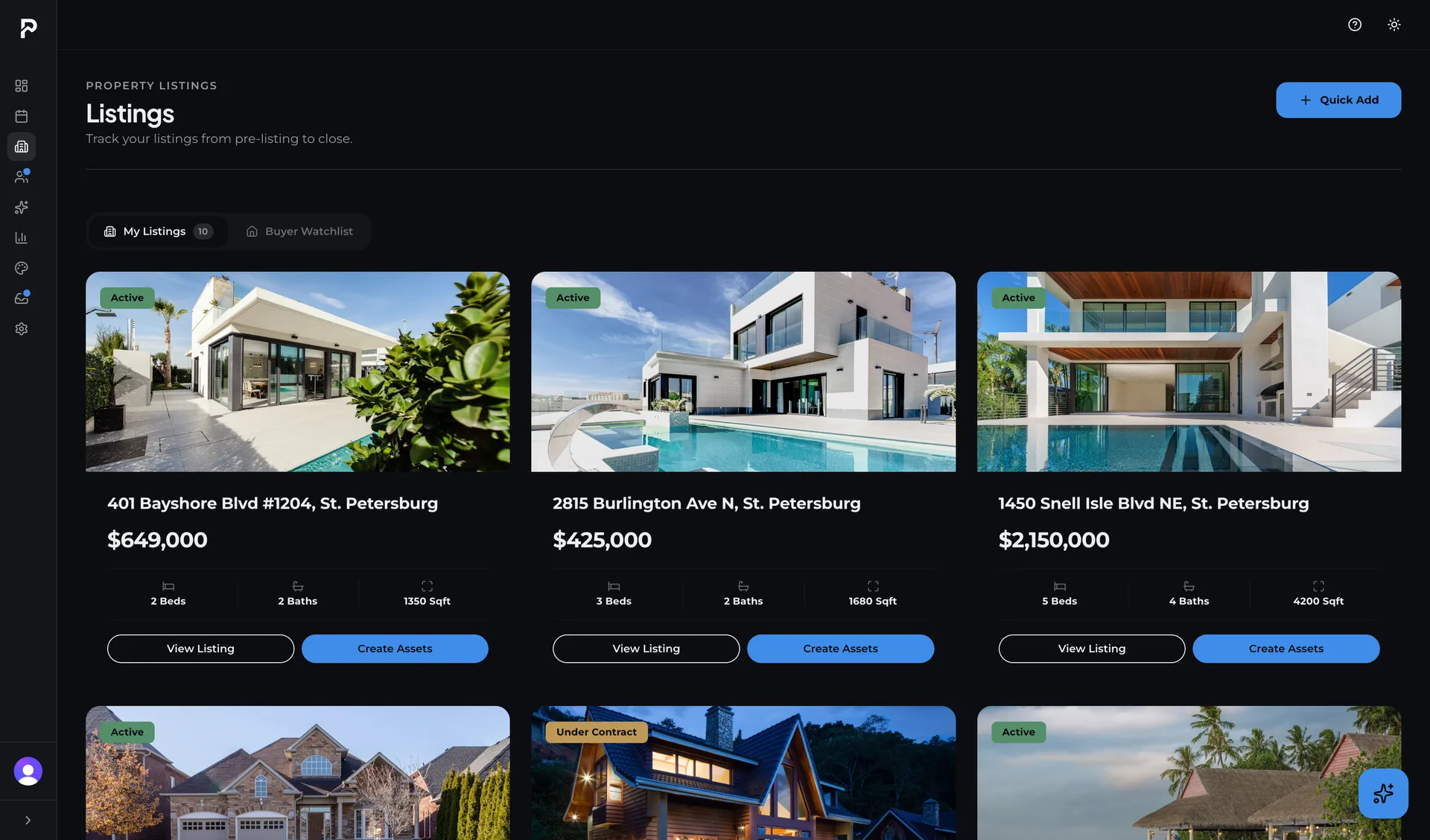
The sequence above works, but running it by hand across dozens of leads is where most agents fall behind. Proplo runs an AI voice agent that places the day-0 call within five minutes of a new lead coming in. It records the call and pulls out budget, timeline, and objections, so the agent walks into the next touch already knowing what matters.
After that first contact, Proplo runs the rest of the sequence on its own: a follow-up email at day 3 of no response, a text at day 5, and a call at day 7. Each touch is personalized to that contact and stops the instant the lead replies. If there is still no contact at all after seven days, Proplo sends a re-engagement message rather than letting the lead sit untouched. Replies land in one place too, since Gmail sync keeps every email tied to the right lead instead of scattered across an inbox.

Clayton Walker · Founder & Product Lead
Founder of Proplo. Ten years in marketing and motion design for the NFL, MLB, MLS, and NBA. He designs Proplo and leads its product direction. Real estate is the family business.
LinkedInFrequently asked questions
A solid sequence starts with a call within 5 minutes of the lead coming in, followed by a text if there is no answer. From there, alternate calls, texts, and emails at day 1, day 3, day 7, day 14, and day 30, with each touch giving the lead a specific reason to respond rather than a generic check-in.
Most agents should run a structured sequence through at least day 30 before moving a lead to a slower monthly cadence. Giving up after one or two attempts loses leads who simply had not started their search yet. A lead that goes fully quiet is not necessarily gone, just not ready right now.
Call first. A live call within 5 minutes of the lead coming in gets the highest response rate because it reaches the buyer while they are still actively searching. If there is no answer, follow with a text within a couple minutes, then an email the same day with something useful.
Automated texts and certain automated calls fall under TCPA rules, which generally require consent before sending marketing messages and a clear opt-out on every text. Collect that consent at intake, keep records of it, and honor opt-out requests immediately to stay compliant with FCC guidance.
Move them to a lighter, longer-interval cadence instead of deleting them. A monthly email with real market news, like a price change or new inventory in their search area, keeps you visible without pressuring someone who is not ready. Many leads come back months later when their circumstances change.
Yes. Platforms built for this run the call, text, and email cadence automatically, stopping as soon as the lead responds. Proplo runs an AI voice agent for the first call and then automates the day 3, day 5, and day 7 touches, so the sequence keeps running even when the agent is busy.